Pivotal wines

Ontdek Europa's
verborgen Wijngaarden.

Deze wijnen zijn alleen voor volwassenen.
Bent u 18 jaar of ouder?

Toegang geweigerd Sorry, deze website is alleen toegankelijk voor personen van 18 jaar en ouder.
← Journaal← Journal

Tsjechische en Slowaakse wijn: het verschil tussen twee ex-buren Czech vs. Slovak Wine: The Difference Since 1993

Tot 1993 was er geen Tsjechische wijn en Slowaakse wijn te onderscheiden: het was gewoon Tsjechoslowaakse wijn, uit één land. De opsplitsing, bekend als de “Fluwelen Scheiding,” verliep vreedzaam, maar liet op wijngebied twee landen achter die sindsdien elk hun eigen weg zijn gegaan. Wat is er sinds de scheiding werkelijk anders geworden, en wat is nog steeds gedeelde geschiedenis?

Wat is het verschil tussen Tsjechische en Slowaakse wijn?

Tsjechische wijn draait vrijwel volledig om Moravië, in het zuidoosten van het land: een koel klimaat waar witte wijn de overhand heeft. Moravische wijn staat internationaal bekend om frisse, aromatische witte wijnen, met maar een klein aandeel rood.

Verreweg het grootste deel van de Tsjechische wijnproductie komt uit deze ene regio, waardoor “Tsjechische wijn” en “Moravische wijn” in de praktijk vaak door elkaar worden gebruikt. Zoiets als een Tsjechisch tegenhanger van de Malokarpatská regio bestaat dan ook niet echt: Moravië is niet één regio naast andere, het is vrijwel de hele Tsjechische wijnbouw ineen.

Slowaakse wijn is breder verspreid: de Malokarpatská regio rond Svätý Jur, waar Chowaniec & Krajčírovič zijn wijngaarden heeft, is er één van meerdere. Slowakije deelt bovendien een eigen stukje van de Tokaj-regio met Hongarije, met een geheel eigen druivenprofiel.

Eén voormalig land, twee wijnbouwtradities die intussen duidelijk uit elkaar zijn gegroeid.

Druivenrassen: wat groeit waar
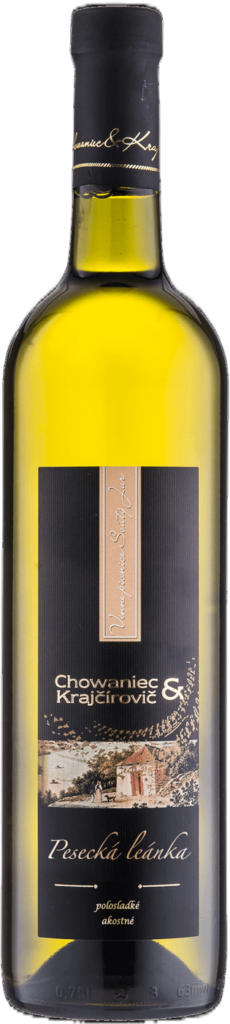
Pesecká Leanka: Slowaakse wijn, geen Tsjechische Muscat

Furmint is de duidelijkste gedeelde erfenis, maar dan met Hongarije, niet met Tsjechië: deze druif groeit al eeuwen in het Slowaakse deel van Tokaj, samen met Lipovina en Muškát Žltý, voor de Slowaakse “Tokajský” wijn. Furmint is dus geen exclusief Hongaars verhaal, ook al wordt het in de meeste wijngidsen wel zo voorgesteld.

Blaufränkisch, in het Slowaaks Frankovka modrá, groeit zowel in Tsjechië, Oostenrijk als in het zuiden van Slowakije, waaronder de Južnoslovenská regio. Dat is dezelfde bredere regio waar de Cabernet Sauvignon van Pivotal Wines vandaan komt, al is Frankovka modrá zelf geen onderdeel van de huidige collectie.

Muškát moravský is echt Tsjechisch: een kruising van Muscat Ottonel en de zeldzame Prachtraube-druif, met circa 900 hectare in Tsjechië en slechts een klein areaal in Slowakije.

Belangrijke correctie hierbij: Pesecká Leanka, één van de zes wijnen bij Pivotal Wines, wordt soms verward met of gelinkt aan Muškát moravský. Dat klopt niet. Achter de naam Pesecká Leanka schuilt gewoon Fetească Regală, een Roemeense druif voor het eerst vastgesteld in Transsylvanië, ergens in de jaren twintig. Van een kruising met de Tsjechische Muscat is geen sprake.

Eén landgoed, twee generaties: Chowaniec & Krajčírovič

Wie die zes wijnen, Pesecká Leanka incluis, daadwerkelijk maakt, is één en dezelfde partij: Chowaniec & Krajčírovič, gevestigd in Svätý Jur, in het hart van de Malokarpatská regio. In 2001 sloegen Peter Chowaniec en Juraj Krajčírovič de handen ineen om dit landgoed vanaf de grond op te bouwen.

Juraj overleed in 2012; sindsdien staat Jana Krajčírovičová, Juraj’s dochter, aan het roer. Geen los netwerk van producenten dus, maar één landgoed, twee generaties, en één rechtstreekse lijn naar Nederland. Hoe die lijn er precies uitziet, is de laatste vraag die overblijft.

Kopen in Nederland: wat is er echt verkrijgbaar

Wie op zoek is naar Tsjechische wijn kopen in Nederland, komt bedrogen uit: een directe importroute zoals Pivotal Wines die voor Slowaakse wijn heeft opgezet, bestaat voor Moravische wijn nog niet op vergelijkbare schaal.

Dat heeft niets te maken met de kwaliteit van wat Moravië produceert, en alles met hoe klein en lokaal de meeste Tsjechische wijnhuizen tot nu toe zijn gebleven.

Voor Slowaakse wijn kopen ligt de vraag dan ook niet zozeer of het kan, maar van welk landgoed. Pivotal Wines importeert rechtstreeks vanuit Svätý Jur, zonder tussenlagen: geen catalogus vol namen, maar één landgoed, in een streek met 750 jaar wijnbouwgeschiedenis.

Benieuwd naar Furmint’s Tokaj-buurman uit die collectie? Bekijk Pesecká Leanka.

Before 1993, there was no such thing as separate Czech wine and Slovak wine: it was simply Czechoslovak wine, from one country. The split, known as the “Velvet Divorce,” was peaceful, but it left two countries behind that have each gone their own way in the vineyard ever since. What has actually changed since the split, and what’s still shared history?

What is the difference between Czech and Slovak wine?

Czech wine centres almost entirely on Moravia, in the southeast of the country: a cool climate where white wine dominates. Moravian wine is internationally known for crisp, aromatic whites, with only a small share of red.

By far the largest share of Czech wine production comes from this one region, which is why “Czech wine” and “Moravian wine” are often used interchangeably in practice. There isn’t really a Czech equivalent of the Malokarpatská region: Moravia isn’t one region among several, it’s practically the whole of Czech winemaking rolled into one.

Slovak wine is spread more widely: the Malokarpatská region around Svätý Jur, where Chowaniec & Krajčírovič has its vineyards, is just one of several. Slovakia also shares its own slice of the Tokaj region with Hungary, with an entirely distinct grape profile of its own.

One former country, two winemaking traditions that have clearly grown apart since.

Grape varieties: what grows where

Pesecká Leanka: Slovak wine, not the Czech Muscat

Furmint is the clearest shared inheritance, but with Hungary, not the Czech Republic: this grape has grown in Slovakia’s part of Tokaj for centuries, alongside Lipovina and Muškát Žltý, for Slovak “Tokajský” wine. Furmint isn’t an exclusively Hungarian story, even though most wine guides present it that way.

Blaufränkisch, called Frankovka modrá in Slovak, grows in the Czech Republic, Austria, and the south of Slovakia, including the Južnoslovenská region. That’s the same broader region Pivotal Wines’ Cabernet Sauvignon comes from, though Frankovka modrá itself isn’t part of the current collection.

Muškát moravský is genuinely Czech: a crossing of Muscat Ottonel and the rare Prachtraube grape, with around 900 hectares in the Czech Republic and only a small area in Slovakia.

An important correction here: Pesecká Leanka, one of Pivotal Wines’ six wines, is sometimes confused with or linked to Muškát moravský. That’s incorrect. Behind the name Pesecká Leanka sits nothing more exotic than Fetească Regală, a Romanian grape first recorded in Transylvania sometime in the 1920s. There’s no crossing involved, no relation to the Czech Muscat.

One estate, two generations: Chowaniec & Krajčírovič

Whoever actually makes those six wines, Pesecká Leanka included, turns out to be one and the same: Chowaniec & Krajčírovič, based in Svätý Jur, at the heart of the Malokarpatská region. In 2001, Peter Chowaniec and Juraj Krajčírovič joined forces to build this estate from the ground up.

Juraj passed away in 2012; Jana Krajčírovičová, Juraj’s daughter, has been at the helm ever since. Not a loose network of producers, then, but one estate, two generations, and one direct line to the Netherlands. Exactly what that line looks like is the last question left.

Buying in the Netherlands: what’s actually available

Anyone looking to buy Czech wine in the Netherlands will come up short: a direct import route like the one Pivotal Wines built for Slovak wine doesn’t exist yet for Moravian wine at a comparable scale.

That has nothing to do with the quality of what Moravia produces, and everything to do with how small and local most Czech wineries have remained so far.

For Slovak wine, the real question isn’t whether it can be bought, but from which estate. Pivotal Wines imports directly from Svätý Jur, with no layers in between: not a catalogue full of names, but one estate, in a region with 750 years of winemaking history.

Curious about Furmint’s Tokaj neighbour from that collection? Browse Pesecká Leanka.

Nieuwsbrief

Krijg Vroege
Toegang.

Als eerste toegang tot wat we binnenhalen, voordat de Wereld het ontdekt.

U staat op de lijst. Welkom bij vroege toegang.
Alleen 18+ · altijd afmelden
0